Religious

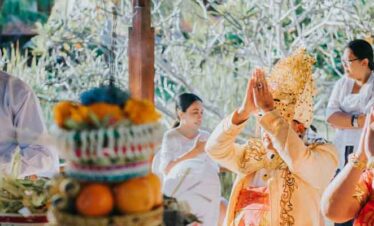
Bali, often referred to as the “Island of the Gods,” has a unique and profound spiritual identity. Approximately 86% of its population adheres to Balinese Hinduism (Agama Hindu Dharma), a harmonious blend of Indian Hindu philosophy, Buddhist teachings, and ancestral animist beliefs.
Philosophy & Core Beliefs
Religious life in Bali is based on maintaining the balance of the universe:
Tri Hita Karana: The core philosophy emphasizing harmony between three relationships: humans with God (Parahyangan), fellow humans (Pawongan), and the natural environment (Palemahan).
Sekala & Niskala: Belief in the visible world (sekala) and the invisible or spiritual realm (niskala). Daily rituals aim to maintain balance between these two realms.
Sang Hyang Widhi Wasa: The Supreme God in Balinese Hinduism. Although there are many manifestations of the gods (such as the Trimurti: Brahma, Vishnu, and Shiva), they are formally recognized as one God.
Daily Rituals & Traditions
Religion in Bali is not just theory, but rather concrete practices seen every day:
Canang Sari: Daily offerings of woven coconut leaves filled with flowers and incense placed in temples, homes, and even on sidewalks as a sign of gratitude.
Melukat: A self-purification ritual using holy water from a natural spring or the sea to cleanse the mind and soul.
Ngaben: A grand cremation ceremony considered a celebration of the soul’s release towards reincarnation or liberation (Moksha).
Major Holidays & Festivals
Bali follows the lunar calendar (Saka) and the 210-day calendar (Pawukon):
Nyepi (Day of Silence): The Saka New Year, celebrated with 24 hours of total silence. All activity on the island, including the airport, ceases for self-reflection.
Galungan & Kuningan: Celebrating the victory of good (Dharma) over evil (Adharma). Marked by rows of penjor (decorated bamboo poles) along the streets.
Saraswati: A holy day dedicated to the Goddess of Knowledge, on which sacred books and manuscripts are blessed.
Major Religious Sites (Temple)
There are over 20,000 temples in Bali.
Religious Harmony
Although predominantly Hindu, Bali is a symbol of tolerance. The Puja Mandala area in Nusa Dua is proof of this, where five places of worship (a mosque, a Catholic church, a Protestant church, a temple, and a vihara) stand side by side in one area.